Phoenix driving can be demanding on any vehicle, but your transmission faces a particularly difficult combination of extreme temperatures, congested roads, long commutes, and hot pavement.
Your transmission already creates heat during normal operation. Add a summer afternoon on I-17, stop-and-go traffic along Bell Road, or the strain of towing a trailer through Arizona, and transmission temperatures can rise quickly. If the system cannot control that heat, the fluid and internal components may begin to deteriorate.
At Pro-Tech Transmissions, we regularly help Phoenix drivers experiencing slipping, delayed engagement, rough shifting, fluid leaks, and other symptoms associated with excessive transmission heat. Understanding the warning signs can help you respond before overheating leads to a breakdown or extensive internal damage.
Can Phoenix Heat Cause a Transmission to Overheat?
Yes. Phoenix heat can contribute to transmission overheating, especially when combined with low or deteriorated fluid, heavy traffic, towing, cooling-system problems, or existing transmission wear.
An automatic transmission depends on fluid to lubricate internal components, create hydraulic pressure, support gear changes, and carry heat away from moving parts. When transmission temperatures become too high, the fluid can begin losing its ability to provide adequate protection.
Heat can also accelerate wear on seals, clutches, gaskets, and other internal components. A transmission that is already experiencing a small leak or cooling problem may begin showing more noticeable symptoms during Arizona’s hottest months.
Extreme outdoor temperatures do not automatically cause every transmission failure. However, they can expose weaknesses in a transmission and make an existing problem worse.
Why Phoenix Driving Is Hard on a Transmission
It is not only the temperature that creates stress. Phoenix drivers face several conditions that can cause a transmission to work harder and generate additional heat.
Stop-and-Go Traffic
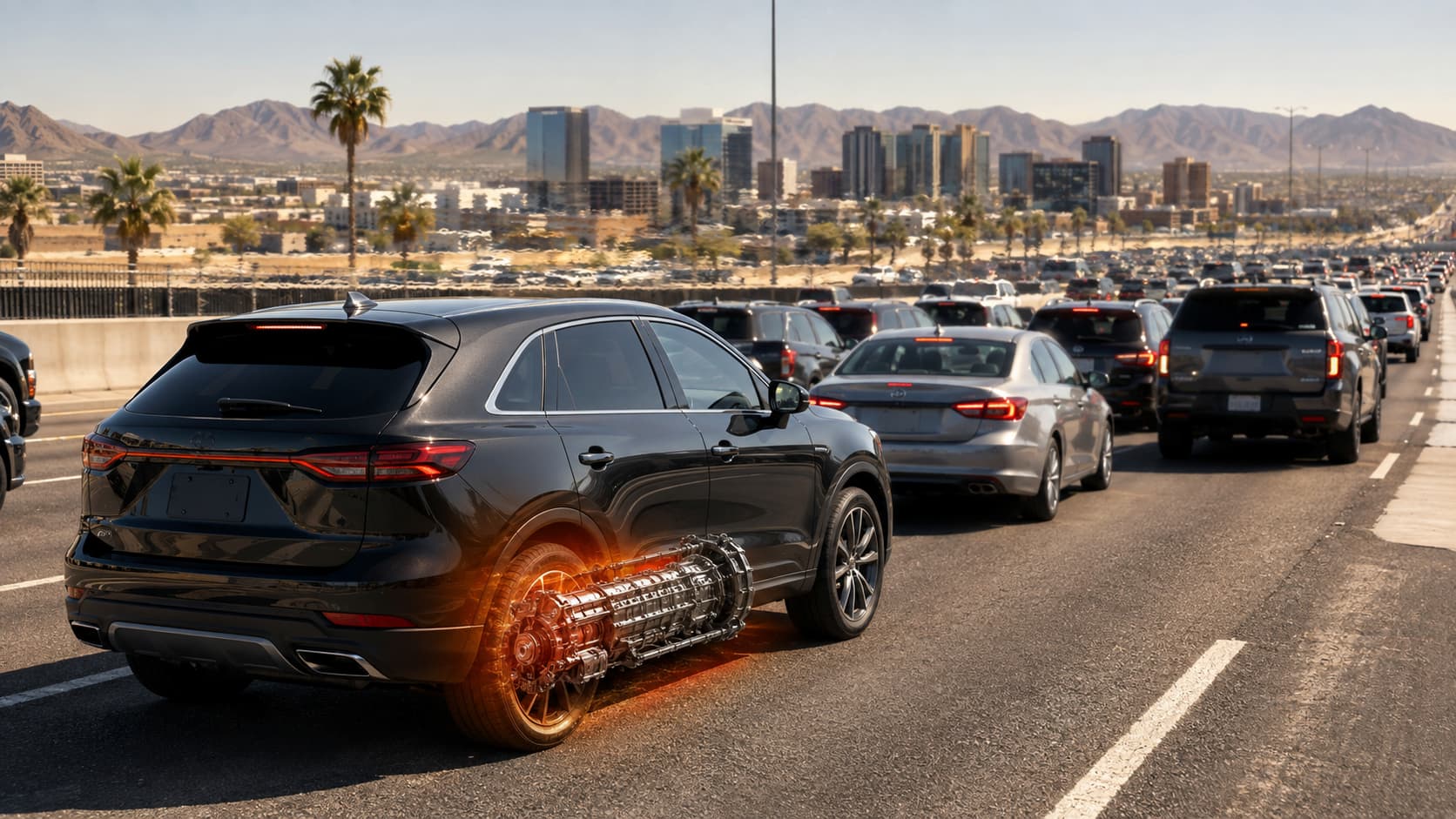
Traffic congestion requires a transmission to shift, slow, and accelerate repeatedly. This frequent operation generates heat and can be especially demanding when the outside temperature is already above 100 degrees.
A slow commute on I-17 or I-10 may not appear as stressful as highway driving, but the combination of limited airflow, frequent gear changes, extended idling, and intense summer heat can increase transmission temperatures.
Long Daily Commutes
The Phoenix metropolitan area is geographically large. Many drivers travel considerable distances between North Phoenix, Scottsdale, Glendale, Tempe, Mesa, Chandler, and other Valley communities.
Long commutes give transmission heat more time to build, particularly when the vehicle is operating with low fluid, restricted cooling, or another unresolved problem.
Towing and Heavy Loads
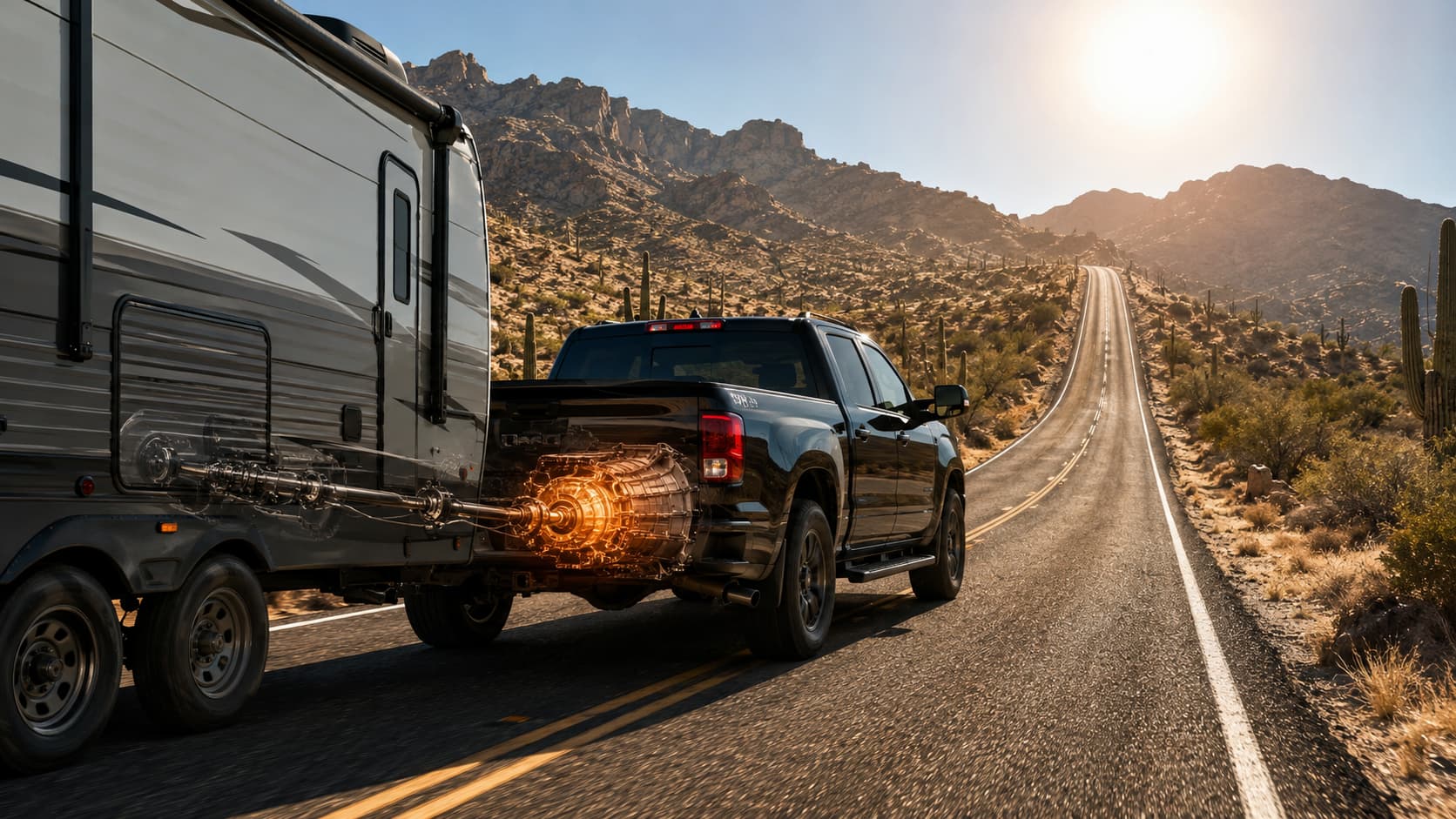
Pulling a boat, work trailer, camper, or recreational vehicle requires the transmission to transfer more power. Carrying heavy cargo can have a similar effect.
The additional workload creates more heat. Exceeding the vehicle’s towing capacity, using the wrong gear, or towing with a transmission that already has a fluid or cooling issue can increase the risk of overheating.
Always follow the vehicle manufacturer’s towing limits and recommendations. Some vehicles may benefit from additional transmission cooling when used for frequent towing, but the correct solution depends on the vehicle and its intended use.
Driving Uphill
Leaving Phoenix for Prescott, Payson, Flagstaff, or another higher-elevation destination places an additional load on the engine and transmission. Long grades can cause the transmission to work harder and shift more frequently.
This becomes more demanding when towing, carrying heavy cargo, or traveling during extreme summer temperatures.
Low or Deteriorated Transmission Fluid
A transmission may overheat when it does not have enough fluid to lubricate its components and carry away heat. Low fluid is often the result of a leak because automatic transmissions are generally sealed systems and should not routinely lose fluid.
Fluid can also deteriorate over time. Repeated exposure to elevated temperatures can reduce its protective qualities, leaving internal parts more vulnerable to friction and wear.
What Are the Signs of an Overheating Transmission?
Common signs of transmission overheating include a burning smell, slipping gears, delayed engagement, rough shifting, warning lights, dark fluid, leaks, and unusual noises.
Symptoms can vary by vehicle and transmission type. Other engine, drivetrain, cooling, or electrical problems can sometimes produce similar symptoms, which is why professional diagnosis is important.
A Burning Smell
A burning odor is one of the most recognizable signs of overheated transmission fluid. The smell may enter the passenger compartment or become noticeable after parking the vehicle.
Do not ignore a burning smell. It could indicate overheated transmission fluid, leaking fluid contacting a hot surface, an electrical problem, or another condition that requires immediate attention.
Slipping Between Gears
A slipping transmission may unexpectedly change gears, struggle to remain in gear, or allow the engine speed to increase without delivering the expected acceleration.
You may press the accelerator and hear the engine rev, but the vehicle does not gain speed normally. Slipping generates additional friction and heat, potentially making an overheating problem worse.
Delayed Engagement
Your vehicle should respond promptly when you shift from park into drive or reverse. A long pause before the gear engages can indicate low fluid, inadequate hydraulic pressure, internal wear, or another transmission problem.
Delayed engagement may be more noticeable after the vehicle becomes hot.
Rough or Unpredictable Shifting
Hard shifts, jerking, clunking, hesitation, or unpredictable gear changes are not normal. These symptoms can develop when overheated or deteriorated fluid is no longer supporting proper transmission operation.
Rough shifting can also result from electrical, hydraulic, computer-control, or mechanical problems. A diagnostic inspection is needed to identify the actual cause.
A Transmission or Check-Engine Light
Modern vehicles use sensors and computers to monitor transmission operation. Excessive transmission temperature or abnormal performance may activate a transmission warning, temperature warning, or check-engine light.
Some vehicles may enter a reduced-power or “limp” mode to help protect the drivetrain. This generally limits performance and may prevent the transmission from shifting normally.
A warning light should be treated as a request for diagnosis, not as a diagnosis by itself. A trouble code identifies the system detecting the problem, but additional testing is normally required to determine why it occurred.
Dark or Burnt-Smelling Fluid
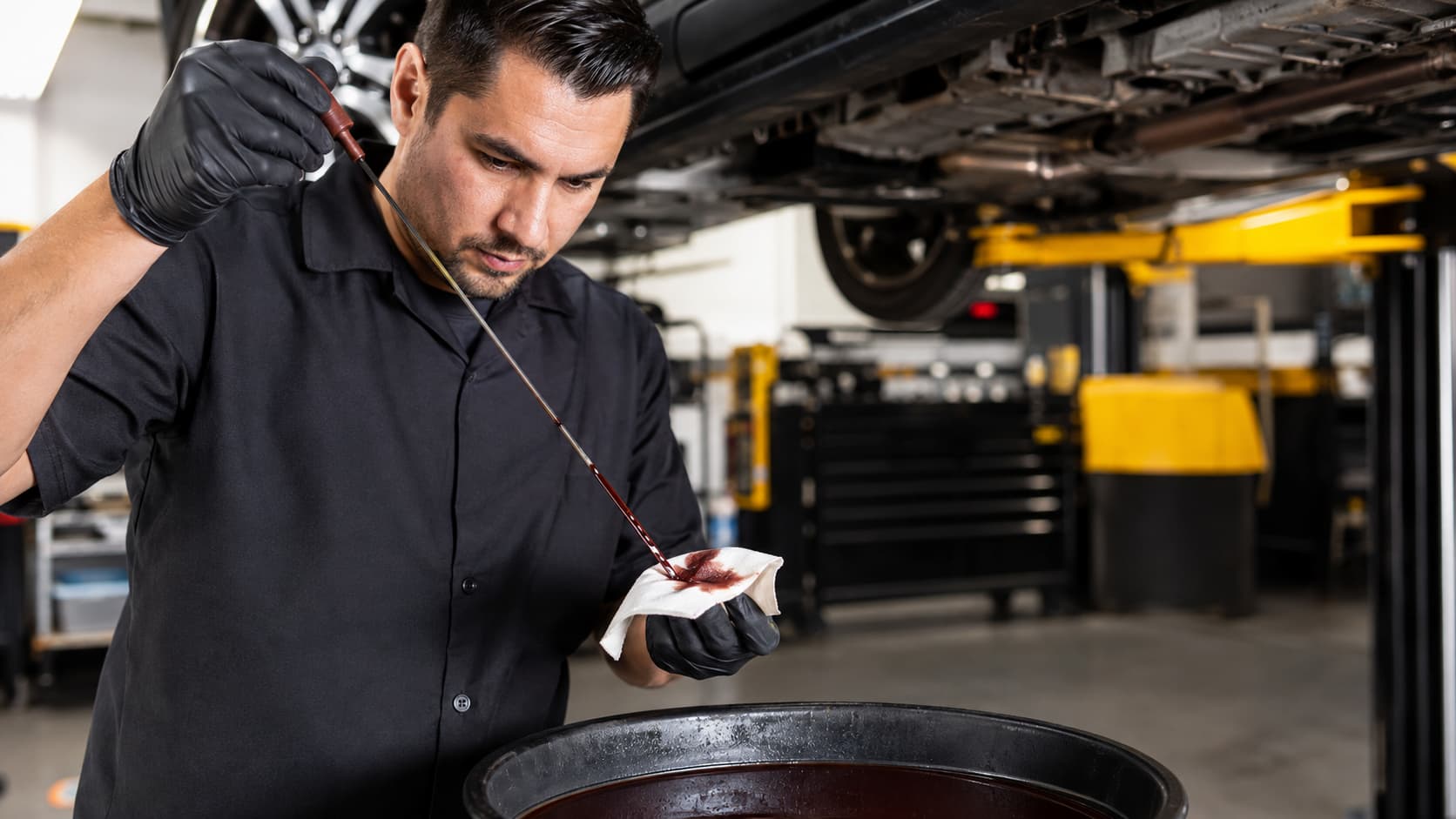
Healthy transmission fluid appearance varies by manufacturer and fluid type, but many automatic transmission fluids are red or reddish when new. As fluid ages, it can darken.
Very dark fluid or fluid with a burnt smell may indicate excessive heat or internal wear. However, fluid color alone does not reveal everything about a transmission’s condition.
The correct fluid type and service procedure also vary by vehicle. Some newer transmissions do not have a traditional dipstick and must be checked at a specific operating temperature.
Transmission Fluid Leaks
Transmission fluid may appear red, reddish-brown, or darker depending on its age. If you notice fluid underneath your vehicle, schedule an inspection.
A leak can lower the fluid level and interfere with lubrication, hydraulic pressure, and cooling. Continuing to drive with insufficient fluid can turn a repairable leak into serious internal damage.
Whining, Humming, Grinding, or Clunking
Unusual noises can come from the transmission, differential, transfer case, engine, wheel bearings, or other vehicle components. If a new sound appears along with shifting problems, leaking fluid, or a burning smell, stop driving and have the vehicle inspected.
What Should You Do If Your Transmission Overheats?
If you believe your transmission is overheating, safely pull off the road, turn off the vehicle, and arrange for professional assistance. Do not continue driving if the transmission is slipping, leaking heavily, shifting violently, or producing a strong burning smell.
Move to a Safe Location
Signal, reduce speed gradually, and pull into a safe parking area or off the roadway. Avoid hard acceleration and sudden maneuvers.
If a warning message specifically instructs you to stop the vehicle, follow the directions in the owner’s manual.
Let the Vehicle Cool
Turn off the vehicle and allow it to cool. Do not touch hot components or open any pressurized cooling-system cap.
Cooling the vehicle may temporarily reduce the temperature, but it does not correct the reason the transmission overheated.
Do Not Keep Driving to “See What Happens”
Continuing to drive an overheating or slipping transmission can cause additional damage. Heat affects the fluid, seals, clutches, and other internal components. What begins as a leak, cooling issue, or electrical malfunction could eventually require major repair.
If you are unsure whether the vehicle can be driven safely, towing is the better choice.
Do Not Add Random Transmission Fluid
Different transmissions require different fluids. Using the wrong product or adding too much can create additional problems.
Many modern vehicles also require a specific procedure and temperature range to check the fluid accurately. Unless you know the correct fluid and process for your vehicle, have a qualified technician inspect it.
Schedule a Transmission Diagnostic
Transmission overheating can have several causes, including:
- Low transmission fluid
- A fluid leak
- Deteriorated or contaminated fluid
- A damaged or restricted transmission cooler
- Cooling-system problems
- Failed sensors or solenoids
- Torque converter problems
- Excessive internal wear
- Improper towing or heavy-load operation
The correct repair depends on what caused the temperature to rise. Replacing fluid without identifying the underlying problem may provide little or no improvement.
Will Changing the Fluid Fix an Overheating Transmission?
A transmission fluid service may help when deteriorated, contaminated, incorrect, or insufficient fluid contributes to excessive heat. However, changing the fluid will not repair broken, worn, or malfunctioning components.
A fluid service cannot correct a damaged transmission cooler, failed solenoid, worn clutch, malfunctioning torque converter, leaking seal, or extensive internal damage.
The condition of the transmission should be evaluated before recommending a service. Some transmissions with significant wear require repair or rebuilding rather than fluid replacement alone.
At Pro-Tech Transmissions, we want to know what is wrong before beginning a repair. Proper diagnosis helps prevent customers from paying for services that do not address the actual problem.
Can Stop-and-Go Traffic Damage a Transmission?
Stop-and-go traffic can increase transmission heat and accelerate wear, especially when the vehicle has low fluid, old fluid, a cooling problem, or existing internal damage.
Under normal conditions, a properly maintained transmission and cooling system should be able to handle typical city driving. Problems become more likely when extreme Phoenix temperatures are combined with repeated shifting, limited airflow, towing, heavy loads, or neglected maintenance.
If your transmission behaves differently in heavy traffic or after it becomes hot, do not dismiss the change. Heat-sensitive symptoms can be an early sign of a developing problem.
How Can Phoenix Drivers Help Prevent Transmission Overheating?
No maintenance plan can prevent every mechanical failure, but several steps can reduce unnecessary heat and help identify problems earlier.
Follow the Manufacturer’s Maintenance Schedule
Transmission maintenance intervals vary significantly. Follow the schedule listed for your specific vehicle, transmission, usage, and driving conditions.
Vehicles used for towing, commercial work, frequent stop-and-go driving, or other severe conditions may have different service requirements.
Address Fluid Leaks Promptly
Even a small leak can eventually reduce the fluid level. If you notice red or brown fluid beneath your vehicle, have it inspected before shifting problems begin.
Maintain the Vehicle’s Cooling System
The engine cooling system and transmission cooling system often work closely together. A radiator, fan, thermostat, coolant, or airflow problem may affect the vehicle’s ability to control temperature.
Respect Towing Limits
Never exceed the manufacturer’s towing or payload limits. Use the appropriate driving mode or gear recommended in the owner’s manual and make sure the vehicle is properly equipped for the load.
Pay Attention to Changes
Do not wait for a dashboard warning. Slipping, delayed engagement, new noises, leaks, burning smells, or rough shifting all deserve attention.
Early diagnosis may provide more repair options and help prevent damage from spreading to additional components.
Does an Overheating Transmission Need to Be Replaced?
Not necessarily. An overheating transmission may need a fluid service, leak repair, electrical repair, cooling-system repair, component replacement, rebuild, or complete replacement. The required work depends on the cause and the extent of any internal damage.
If overheating is identified early, the problem may be repairable before the transmission experiences extensive wear. If the vehicle has been driven repeatedly while overheating or slipping, more significant repairs may be necessary.
Vehicle age, mileage, overall condition, repair cost, parts availability, and long-term reliability should all be considered when deciding between repair, rebuilding, and replacement.
Get a Free Transmission Diagnostic in Phoenix
If your transmission is slipping, overheating, leaking, shifting roughly, or producing a burning smell, do not wait for the vehicle to stop moving.
Pro-Tech Transmissions specializes in transmission diagnosis, repair, rebuilding, and replacement for all transmission types and vehicle brands. We also service differentials and transfer cases.
Our Phoenix transmission shop offers a free diagnostic so we can determine what is wrong before recommending repairs. We also provide free towing up to a $100 value with a major auto repair, and financing options are available.
Repaired and rebuilt transmissions are backed by our three-year or 36,000-mile warranty. Manual transmissions and clutches include a 12-month or 12,000-mile warranty.
Visit our Phoenix location:
Pro-Tech Transmissions
2226 W. Bell Road
Phoenix, AZ 85023
Phone: (602) 978-9201
We are open Monday through Friday from 8:00 a.m. to 5:00 p.m. and Saturday from 8:00 a.m. to noon.
Whether your transmission began acting up in traffic on I-17, during a commute through North Phoenix, or while towing outside the Valley, our team is ready to diagnose the problem and explain your options. Contact Pro-Tech Transmissions today before excessive heat leads to more serious damage.
Frequently Asked Questions About Transmission Overheating
How do I know if my transmission is overheating?
Common signs include a burning smell, slipping, rough shifting, delayed engagement, warning lights, dark fluid, leaks, and unusual noises. Some vehicles display a specific transmission-temperature warning. Safely stop driving and arrange for an inspection if the vehicle is slipping, leaking heavily, or producing a strong burning smell.
Can I drive with an overheating transmission?
You should not continue driving a transmission that is overheating, slipping, shifting violently, or emitting a burning odor. Continuing to drive can damage the fluid and internal components. Pull over safely, allow the vehicle to cool, and arrange for professional assistance or towing.
Why does my transmission only slip when the vehicle is hot?
Heat can change fluid pressure and expose worn seals, clutches, solenoids, or other internal problems. Low or deteriorated fluid may also perform worse as temperatures rise. A diagnostic inspection is necessary to identify the specific cause.
Can low transmission fluid cause overheating?
Yes. Insufficient fluid reduces lubrication and makes it more difficult for the transmission to carry heat away from internal components. Because low fluid often indicates a leak, the source should be located and repaired instead of repeatedly adding fluid.
Does Phoenix traffic make transmissions run hotter?
Stop-and-go traffic can increase transmission temperatures because it involves repeated shifting, acceleration, and limited airflow. Extreme outdoor temperatures, towing, heavy loads, old fluid, and cooling problems can increase the strain further.
Will my transmission return to normal after it cools down?
It may temporarily shift normally again, but cooling does not repair the condition that caused the overheating. If the problem involves a leak, damaged cooler, deteriorated fluid, electrical malfunction, or internal wear, the symptoms will likely return and may become worse.
How can I prevent transmission overheating while towing in Arizona?
Stay within the manufacturer’s towing and payload limits, follow the recommended maintenance schedule, use the correct driving mode or gear, and ensure the transmission and cooling systems are in good condition. Ask a transmission specialist whether additional cooling is appropriate for your vehicle and towing habits.