Ask most drivers when they last changed their oil and they can give you a rough answer. Ask when they last had their transmission fluid serviced and you usually get a blank look. At Pro-Tech Transmissions, we see the result of that gap every week at our Phoenix shop: transmissions that came in slipping, shuddering, or running hot, with fluid that hadn’t been looked at in years.
Transmission fluid is one of the cheapest things you can maintain on a vehicle and one of the most expensive to ignore. Here’s what it does, how often Phoenix drivers should deal with it, and how to tell when it’s already telling you something is wrong.
What Does Transmission Fluid Actually Do?
Transmission fluid does several jobs at once. It lubricates the gears, clutches, and bearings inside the transmission, it carries heat away from those parts, and in an automatic transmission it provides the hydraulic pressure that makes shifting happen in the first place.
Over time, heat and friction break the fluid down. It loses its ability to lubricate and cool, and it picks up tiny particles of clutch material and metal. Worn-out fluid doesn’t just stop helping. It speeds up the wear it was supposed to prevent.
How Often Should Transmission Fluid Be Changed in Phoenix?
Most manufacturers recommend a transmission fluid service somewhere between 30,000 and 60,000 miles, but the exact interval depends on your vehicle, so your owner’s manual is the first place to check.
Phoenix is a reason to lean toward the shorter end of that range. Many manufacturers publish a separate “severe service” schedule that applies to towing, extreme heat, and heavy stop-and-go driving, and a normal Valley week can include all three. Triple-digit summers, rush-hour traffic on I-17, Loop 101, and the 51, and trips up to higher elevations all keep transmission fluid working harder than it would in a milder climate.
If you’re not sure which schedule applies to your driving, ask. We can check the condition of your fluid and tell you where it stands.
What Color Should Transmission Fluid Be?
Fluid condition is one of the quickest ways to read the health of a transmission. Here’s what the color and smell usually mean:
- Bright red or pink and nearly odorless: healthy fluid.
- Dark red or light brown: the fluid is aging and due for service.
- Dark brown or black, or smelling burnt: the fluid has been overheated and is no longer protecting the transmission. This is often a sign of internal wear, so it’s worth getting the transmission looked at, not just the fluid changed.
- Milky or foamy pink: this can mean coolant is leaking into the transmission, which needs attention right away.
One catch: many newer vehicles have sealed transmissions with no dipstick, so you can’t check the fluid yourself in the driveway. If your car doesn’t have one, a shop needs to check it for you.
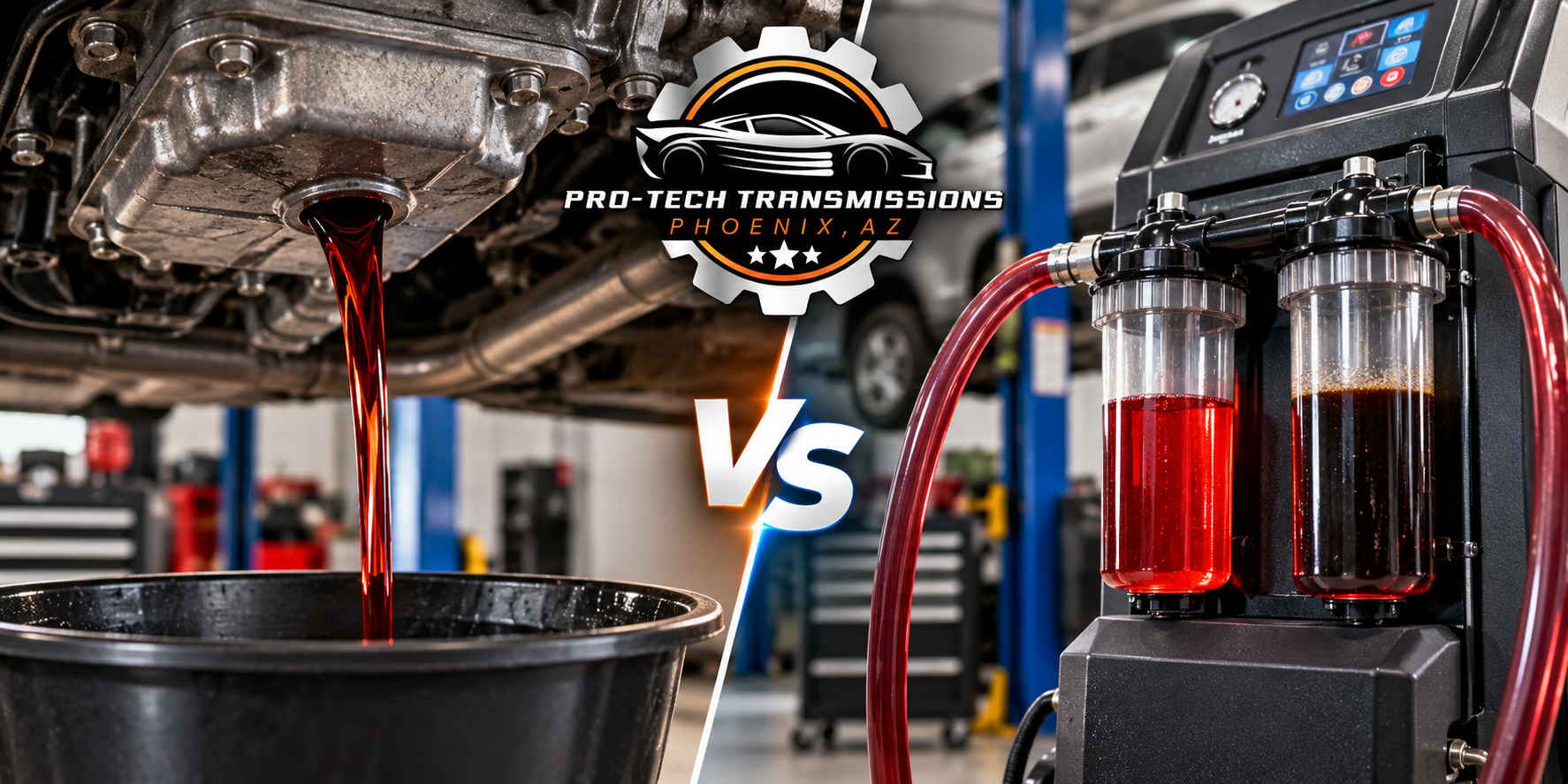
Fluid Change vs. Transmission Flush: What’s the Difference?
People often use these terms interchangeably, but they aren’t the same service.
A drain-and-fill (the standard fluid change) drains the fluid from the pan and replaces it with fresh fluid. Some old fluid stays behind in the torque converter and passages, so it replaces part of the fluid, not all of it.
A flush uses a machine to push most of the old fluid out and fresh fluid in. It replaces more fluid in one visit, but whether it’s the right choice depends on the vehicle and the condition of the transmission.
The right service depends on your make, mileage, and what the fluid looks like, which is why we’d rather look at the vehicle first than sell a service by name.
Can I Just Top Off Low Transmission Fluid?
Unlike engine oil, transmission fluid doesn’t get used up in normal operation. If your level is low, fluid is going somewhere, which usually means a leak from a seal, a pan gasket, or a cooler line.
Topping it off treats the symptom and leaves the leak in place. It also matters which fluid goes in: vehicles specify particular fluid types, and CVTs in particular use their own fluid, so the wrong one can cause shifting problems of its own. If you keep adding fluid, find the leak instead.
What Happens If You Skip Transmission Fluid Service?
Skipping it doesn’t cause a sudden failure. It causes slow, cumulative wear. As fluid degrades, you may notice:
- Delayed or hesitant shifts, especially into Drive or Reverse
- Rough or jerky shifting between gears
- Slipping, where the engine revs without the vehicle accelerating to match
- A shudder at highway speed
- A burning smell, particularly after summer driving
Any of these can have other causes, but all of them are worth checking before they turn into a rebuild. If your transmission is already running hot in summer traffic, our post on whether Phoenix traffic can overheat your transmission covers the warning signs in more detail.
Keeping up with scheduled maintenance matters for another reason. Failure to perform scheduled maintenance is one of the exclusions on our warranty, so regular fluid service protects the repair work as well as the transmission.
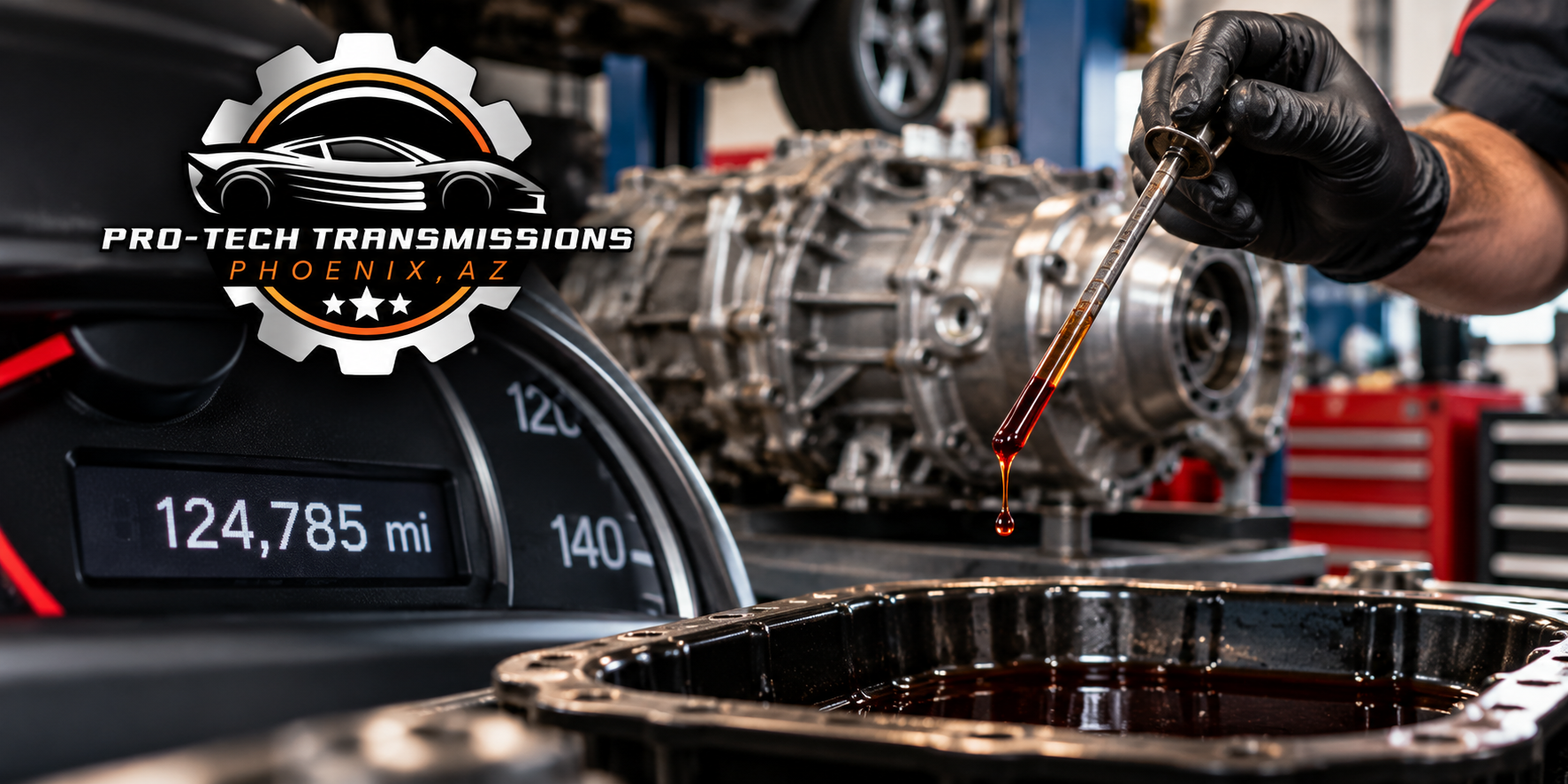
Is It Safe to Change the Fluid on a High-Mileage Transmission?
This is one of the most common questions we get, and the honest answer is that it depends on the transmission.
Fresh fluid is good for almost any transmission, and a vehicle that has been serviced regularly all along is rarely a concern. A transmission that has gone a very long time without service is different. Fresh fluid can’t undo wear that has already happened, and if the transmission is already slipping or shifting hard, new fluid won’t fix it. In those cases we recommend a diagnostic first, so you know what you’re dealing with before spending money on a service that may not help.
Transmission Fluid Service in Phoenix and the Surrounding Valley
Pro-Tech Transmissions is at 2226 W Bell Rd in Phoenix, just east of I-17 near 23rd Avenue, and we serve drivers throughout North Phoenix, Deer Valley, Sunnyslope, Glendale, Peoria, Scottsdale, and the rest of the Valley. We’re open Monday through Friday from 8:00 AM to 5:00 PM and Saturday from 8:00 AM to 12:00 PM.
If you’re not sure whether your fluid is due, or you’ve noticed any of the symptoms above, start with our free diagnostic. We’ll tell you what we find before any work begins.
Your Transmission Fluid Checklist
- Check your owner’s manual for the recommended service interval, and look for a severe-service schedule.
- If your vehicle has a dipstick, check the fluid color and smell.
- Lean toward the shorter interval if you tow, sit in heavy traffic, or drive in summer heat.
- Don’t keep topping off a low level. Find the leak.
- Don’t ignore delayed shifts, slipping, shuddering, or a burning smell.
- If your car has no dipstick, have a shop check the fluid for you.
Wondering whether your transmission fluid is due? Pro-Tech Transmissions offers a free diagnostic at our Phoenix shop, Schedule a free diagnostic →