When your transmission begins slipping, shifting hard, leaking fluid, or making unusual noises, one question usually comes to mind: Does the transmission need to be repaired, rebuilt, or completely replaced?
The answer depends on the type of transmission, the extent of the damage, the vehicle’s mileage, the availability of parts, and the overall condition of the vehicle. Some problems can be corrected with a targeted repair. Others require the transmission to be removed and rebuilt. When rebuilding is not practical, replacement may be the most dependable option.
At Pro-Tech Transmissions, we diagnose transmission problems for drivers throughout Phoenix, North Phoenix, Deer Valley, Sunnyslope, Glendale, Peoria, Scottsdale, and surrounding communities. Before recommending a major repair, our technicians work to determine what is actually wrong and which option makes the most sense for your vehicle.
What Is the Difference Between Transmission Repair, Rebuilding, and Replacement?
Here is the short answer:
- Transmission repair addresses one or more specific problems without rebuilding the entire transmission.
- Transmission rebuilding involves removing and disassembling the transmission, replacing worn or damaged internal components, and reassembling it.
- Transmission replacement means removing the existing transmission and installing another unit.
A repair is generally appropriate when the problem is isolated. A rebuild may be recommended when several internal components are worn or damaged but the transmission can still be restored. Replacement may be the better choice when the existing unit is severely damaged, unsuitable for rebuilding, or when another dependable unit provides better value.
A professional transmission diagnostic is necessary because similar symptoms can have very different causes.
What Is Transmission Repair?
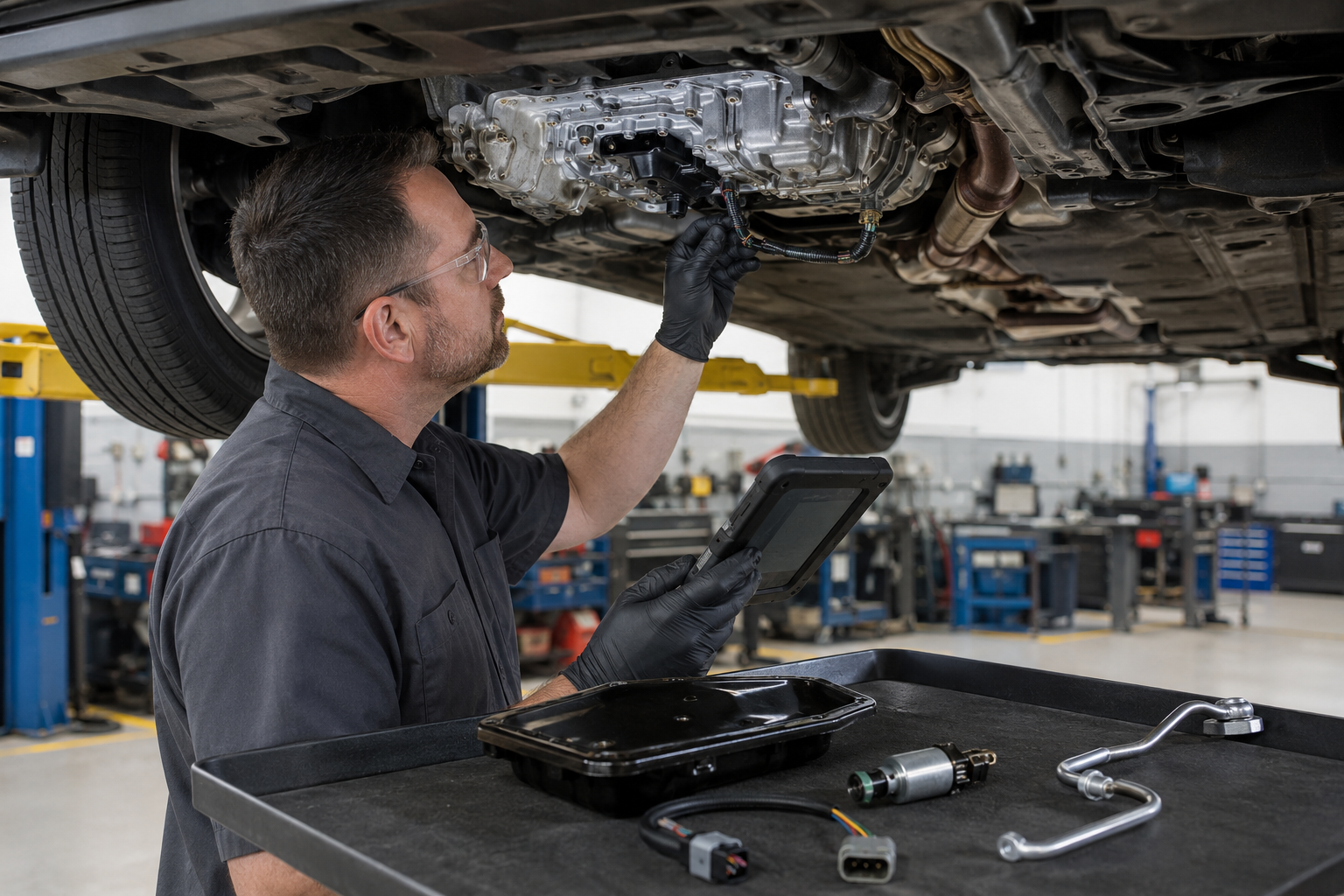
Transmission repair focuses on correcting a specific fault rather than rebuilding or replacing the entire unit.
Depending on the vehicle and diagnosis, a repair may involve replacing or correcting:
- Solenoids
- Sensors
- Seals and gaskets
- Transmission fluid lines
- Electrical connections
- External control components
- Valve-body components
- Transmission mounts
- Certain accessible internal parts
- Transmission fluid leaks
Not every shifting problem means the entire transmission has failed. Modern transmissions depend on electronic controls, sensors, wiring, hydraulic pressure, and mechanical components working together. A malfunctioning sensor or damaged wire can sometimes create symptoms that feel like major internal transmission trouble.
This is one reason Pro-Tech Transmissions performs a diagnostic evaluation before recommending repairs.
When Is a Transmission Repair the Right Choice?
A targeted repair may be appropriate when:
- The problem is limited to a specific component
- The transmission has not experienced widespread internal damage
- Diagnostic testing identifies an electrical or control issue
- A leak can be repaired before low fluid causes serious damage
- The transmission still operates properly aside from one identifiable fault
- The repair offers a reliable solution for the vehicle
Repairing an isolated problem can cost less and take less time than rebuilding or replacing the transmission. However, a smaller repair is only worthwhile if it addresses the actual cause of the symptoms.
What Is a Transmission Rebuild?
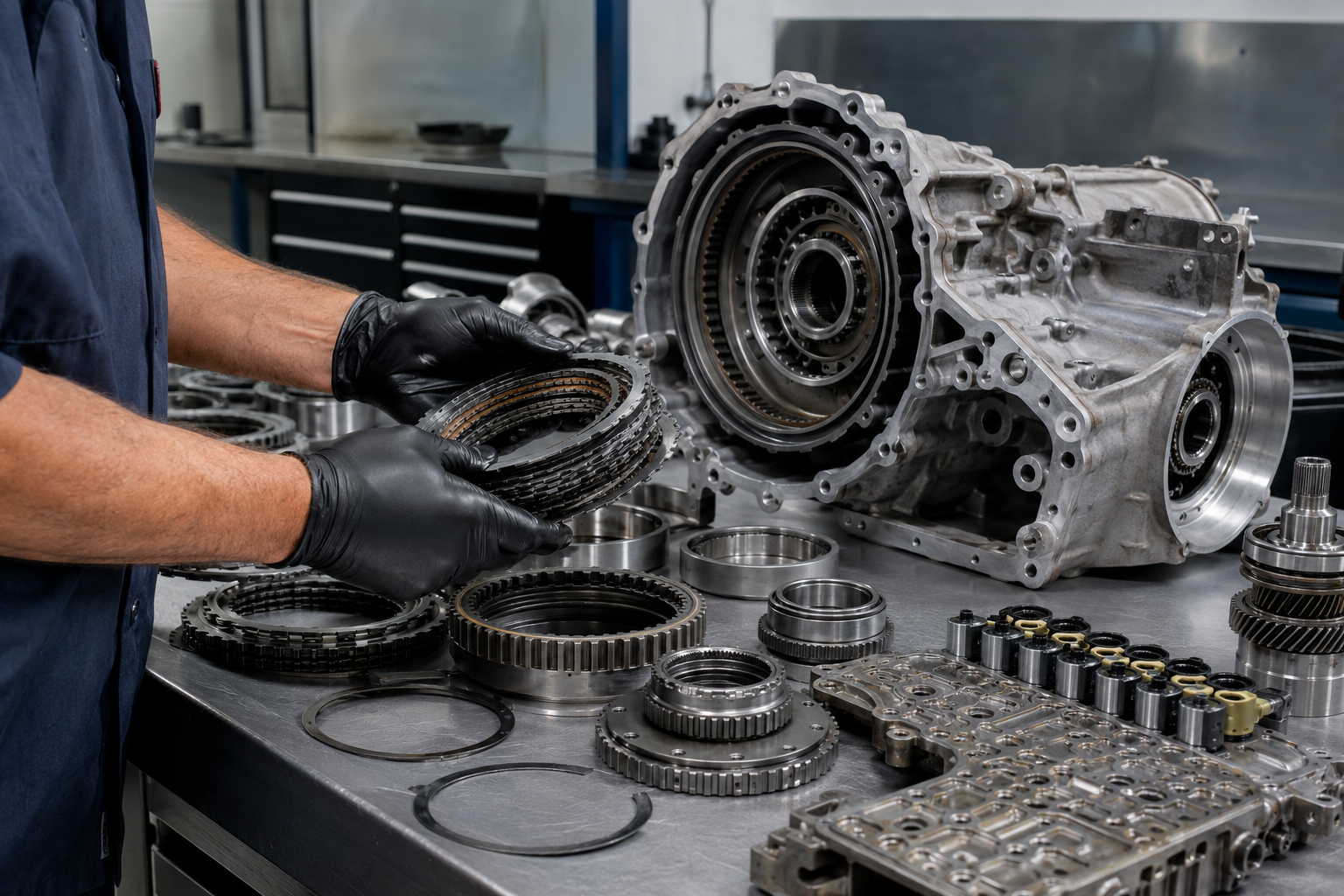
A transmission rebuild is a comprehensive repair process. The transmission is removed from the vehicle, taken apart, cleaned, inspected, and reassembled with the necessary replacement components.
During a rebuild, technicians inspect parts such as:
- Clutches
- Bands
- Seals
- Gaskets
- Bushings
- Bearings
- Drums
- Shafts
- Pumps
- Valve-body components
- Planetary gear components
- Torque converter
- Transmission case
Parts that are damaged or worn beyond acceptable limits are replaced. Reusable components are cleaned and inspected before the transmission is reassembled and installed.
The exact rebuilding process depends on the transmission design and the damage discovered during disassembly.
When Does a Transmission Need to Be Rebuilt?
A rebuild may be recommended when:
- Multiple internal components are worn
- The transmission slips in several gears
- Internal clutch material has deteriorated
- Metal or excessive debris is found in the fluid or pan
- The transmission has suffered internal overheating damage
- Hydraulic pressure problems originate inside the unit
- A single external repair will not correct the problem
- The original transmission can be reliably restored
Rebuilding allows technicians to inspect the internal condition of the transmission rather than replacing only the most obvious failed component.
What Are the Benefits of Rebuilding a Transmission?
A professionally rebuilt transmission can offer several advantages:
- The original transmission is restored using inspected and replaced components
- Known wear and internal damage can be addressed during one repair
- The rebuild can be tailored to the vehicle’s specific transmission
- Customers know which shop performed the work
- Warranty protection may be available
- It can provide better long-term value than repeatedly repairing individual failures
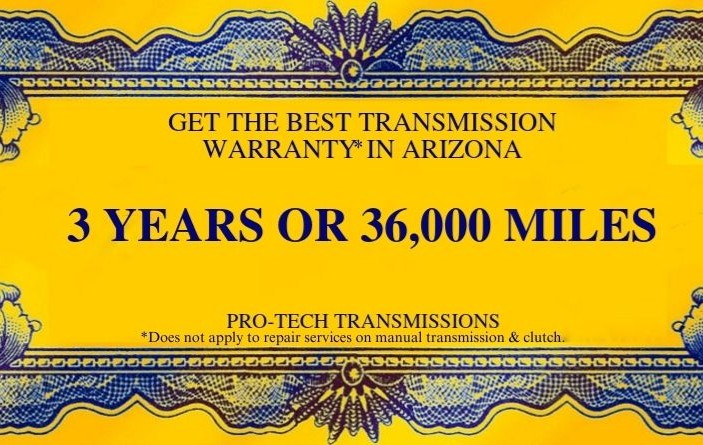
At Pro-Tech Transmissions, qualifying repaired and rebuilt automatic transmissions are backed by a three-year or 36,000-mile warranty. Warranty terms differ for manual transmissions and clutch work, so customers should review the applicable coverage when scheduling service.
What Is Transmission Replacement?
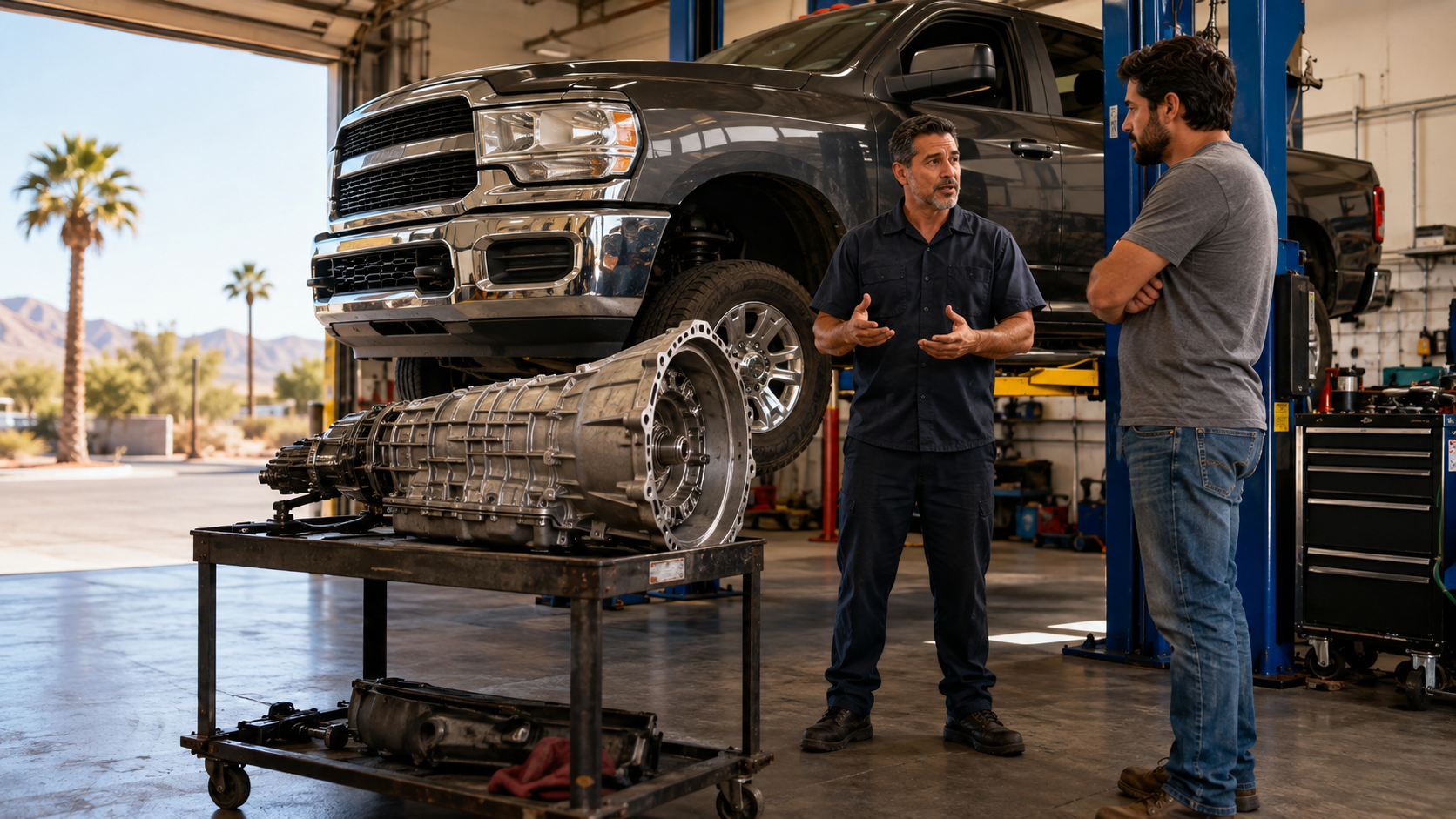
Transmission replacement involves removing the malfunctioning transmission and installing another unit.
The replacement may be:
- A new transmission
- A remanufactured transmission
- A rebuilt transmission
- A used transmission
These terms are not interchangeable. Each option has different costs, availability, mileage, warranty coverage, and potential risks.
New Transmission
A genuinely new transmission contains new components and has not previously been used. New units may not be available for every vehicle and are often among the most expensive options.
Remanufactured Transmission
A remanufactured transmission is rebuilt through a standardized production process. The unit is disassembled, inspected, restored, tested, and supplied as a replacement assembly. Quality and warranty coverage can vary by provider.
Rebuilt Transmission
A rebuilt transmission has been disassembled and repaired using a combination of replacement and serviceable existing components. It may be rebuilt locally or obtained from another supplier.
Used Transmission
A used transmission is removed from another vehicle and installed without being completely rebuilt. It may offer a lower initial price, but its service history, internal wear, and remaining lifespan may be uncertain.
When Is Transmission Replacement the Better Option?
Replacement may be recommended when:
- The transmission case is cracked or severely damaged
- Important internal components cannot be reused
- Rebuild parts are unavailable
- A dependable replacement unit is more economical
- The existing transmission has already undergone unsuccessful repairs
- The damage is too extensive for a practical rebuild
- The manufacturer or transmission design makes replacement preferable
The best replacement option depends on the vehicle, transmission type, budget, intended length of ownership, and available warranty.
How Does a Transmission Shop Determine What You Need?
A reputable transmission shop should not recommend a rebuild or replacement based on symptoms alone.
Slipping, delayed engagement, hard shifts, or warning lights can be caused by several different problems. The diagnostic process may include:
Discussing the Symptoms
The technician needs to understand what the vehicle is doing and when it occurs. Important details include:
- Whether the problem happens when the vehicle is cold or hot
- Which gears are affected
- Whether the issue occurs during acceleration
- Whether the vehicle hesitates when shifted into Drive or Reverse
- Whether warning lights are illuminated
- Whether fluid has been leaking
- Whether the vehicle has recently overheated
- Whether the transmission has been serviced or repaired before
Checking the Transmission Fluid
Transmission fluid can provide important clues. A technician may check its level, color, odor, and condition.
Low fluid may indicate a leak. Dark or burnt-smelling fluid can indicate excessive heat or internal wear. Metal particles or clutch material may point toward internal damage.
Not all modern vehicles have an easily accessible transmission dipstick, so fluid inspection may require professional equipment and procedures.
Scanning the Vehicle
Modern transmissions are electronically controlled. Diagnostic scanning may reveal trouble codes involving solenoids, sensors, gear ratios, pressure, temperature, or communication between control modules.
A diagnostic code identifies where further testing is needed; it does not always identify the exact component that should be replaced.
Inspecting External Components
Some transmission symptoms originate outside the transmission. Technicians may inspect wiring, connectors, mounts, fluid lines, axles, and related drivetrain components.
Performing a Road Test
When the vehicle can be driven safely, a road test may help the technician evaluate shift timing, slipping, noises, vibration, delayed engagement, and operating temperature.
Evaluating Internal Damage
If testing indicates a serious internal problem, further inspection may be needed. The extent of the damage sometimes cannot be confirmed until the transmission pan is inspected or the unit is removed and disassembled.
Signs You May Only Need a Transmission Repair
A smaller repair may be possible when you experience:
- A transmission fluid leak
- One diagnostic code tied to an external sensor
- Intermittent shifting caused by an electrical connection
- A faulty solenoid
- A damaged transmission mount
- A problem found early before internal damage occurs
These symptoms do not guarantee that a minor repair will be enough. They simply indicate that the entire transmission may not have failed.
The earlier you have the vehicle diagnosed, the better the chance of addressing a problem before it damages additional components.
Signs You May Need a Transmission Rebuild or Replacement
More extensive service may be necessary when:
- The transmission slips repeatedly
- The vehicle will not move in one or more gears
- Drive or Reverse takes several seconds to engage
- The transmission makes grinding, whining, or clunking noises
- The fluid smells burnt
- Metal or heavy debris is present in the transmission pan
- The transmission has severely overheated
- Multiple internal components have failed
- Previous repairs have not corrected the problem
- The vehicle enters limp mode repeatedly
- The transmission has lost hydraulic pressure
Stop driving if the vehicle cannot shift safely, loses power unexpectedly, or shows signs of severe overheating. Continuing to drive can turn a repairable problem into extensive internal damage.
How Phoenix Driving Conditions Affect the Decision
Phoenix creates an especially demanding environment for automatic transmissions.
During summer, ambient temperatures can exceed 110 degrees. Stop-and-go traffic on I-17, Loop 101, State Route 51, and surface streets adds additional heat because the transmission is constantly shifting and generating friction.
Long commutes, heavy loads, towing, steep drives outside the Valley, and delayed fluid maintenance can increase the strain.
Heat can:
- Break down transmission fluid
- Reduce the fluid’s ability to lubricate internal parts
- Harden seals
- Increase clutch wear
- Raise operating temperatures
- Contribute to slipping and delayed shifting
- Accelerate existing transmission problems
A transmission with minor wear may continue operating in cooler conditions but begin showing symptoms during a Phoenix summer. That does not mean the vehicle automatically needs a replacement. It means temperature, fluid condition, pressure, and internal wear should all be evaluated.
Is It Worth Rebuilding or Replacing an Older Vehicle’s Transmission?
The decision should be based on the complete vehicle—not its age alone.
Consider:
- The vehicle’s overall condition
- Current mileage
- Engine condition
- Maintenance history
- Outstanding loans or payments
- Cost of purchasing another dependable vehicle
- How long you plan to keep it
- Availability of transmission parts
- Warranty coverage
- Reliability of the proposed repair
A paid-off vehicle in good condition may be worth repairing even with high mileage. On the other hand, a vehicle with serious engine, electrical, suspension, and transmission problems may not justify a major investment.
A trustworthy transmission shop should explain the available choices and give you enough information to make an informed decision.
Rebuild or Replace: Which One Lasts Longer?
Neither option automatically lasts longer in every situation.
Longevity depends on:
- Quality of parts
- Technician experience
- Accuracy of the original diagnosis
- Condition of supporting systems
- Cooling-system performance
- Transmission design
- Driving habits
- Maintenance
- Towing and vehicle loads
- Warranty protection
A properly rebuilt transmission can provide years of dependable service. A quality replacement can also be a strong solution. The better choice is the one that properly addresses the vehicle’s condition and is supported by good workmanship and a meaningful warranty.
Do Not Approve a Major Transmission Repair Without a Diagnosis
A transmission replacement is a major decision. Before approving one, make sure the shop has explained:
- What failed
- How the failure was confirmed
- Whether a targeted repair is possible
- Whether rebuilding is practical
- What type of replacement is being proposed
- What is included in the estimate
- What warranty applies
- Whether related components also need attention
At Pro-Tech Transmissions, our goal is to identify the real source of the problem before recommending a repair. We provide a free external computer diagnostic and explain whether repairing, rebuilding, or replacing the transmission is the most appropriate path.
Schedule Transmission Service in Phoenix
If your vehicle is slipping, shifting hard, leaking fluid, hesitating, overheating, or making unusual noises, have it checked before the problem becomes worse.
Pro-Tech Transmissions repairs, rebuilds, and replaces automatic, manual, CVT, and other transmission types for drivers throughout Phoenix and the surrounding Valley. Our Phoenix transmission shop is located at:
Pro-Tech Transmissions
2226 W. Bell Road
Phoenix, AZ 85023
Phone: (602) 978-9201
Our North Phoenix location is convenient to I-17 and serves drivers from Deer Valley, Sunnyslope, Glendale, Peoria, Scottsdale, Paradise Valley, Anthem, Cave Creek, and communities across the Phoenix Valley.
Free towing of up to a $100 value is available with qualifying major repairs. Financing options are also available for approved customers.
Call (602) 978-9201 to schedule a transmission diagnostic and find out what your vehicle actually needs.
Frequently Asked Questions
Is it cheaper to rebuild or replace a transmission?
It depends on the vehicle, transmission type, internal damage, parts availability, labor requirements, and type of replacement unit. A rebuild may provide better value when the original transmission can be reliably restored. Replacement may be more practical when damage is severe or rebuild parts are unavailable. A diagnostic evaluation is needed before comparing your real options.
Can a transmission be repaired without rebuilding it?
Yes. Problems involving leaks, sensors, solenoids, wiring, mounts, fluid lines, and certain valve-body components may be repairable without rebuilding the complete transmission. However, slipping or shifting symptoms can also indicate internal damage. Testing is necessary to determine whether a targeted repair will provide a reliable solution.
How do I know whether my transmission needs to be rebuilt?
Common indications include repeated slipping, burnt transmission fluid, delayed engagement, loss of certain gears, internal debris, hydraulic pressure problems, and failure of multiple internal components. These symptoms alone do not confirm that a rebuild is necessary. The transmission must be properly diagnosed and may require internal inspection.
Is a rebuilt transmission the same as a used transmission?
No. A rebuilt transmission has been disassembled, inspected, cleaned, and repaired with necessary replacement components. A used transmission is removed from another vehicle and typically installed without a complete internal rebuild. A used unit’s mileage, previous maintenance, internal condition, and remaining lifespan may be less certain.
How long does a rebuilt transmission last?
The lifespan depends on the quality of the rebuild, transmission design, condition of the vehicle’s cooling system, driving habits, maintenance, and operating temperatures. A professionally rebuilt transmission that is properly installed and maintained can provide dependable service for many years. Warranty coverage should also be considered when comparing repair options.
Can Phoenix heat cause transmission failure?
Extreme heat can contribute to transmission fluid deterioration, overheating, seal damage, clutch wear, and accelerated internal wear. Phoenix traffic, towing, heavy loads, and long summer commutes can increase that stress. Heat is not the only cause of transmission failure, but it can worsen existing problems and make proper fluid condition and cooling especially important.