You’re driving through Phoenix when suddenly a warning light appears on your dashboard. Maybe it’s the familiar check engine light. Maybe it’s a transmission warning light or a message telling you there’s a problem with the transmission.
So, what exactly is your vehicle trying to tell you?
A check engine light doesn’t automatically mean there’s something wrong with the engine. In fact, transmission problems can sometimes trigger the check engine light, especially on modern vehicles where the engine, transmission, and onboard computer systems constantly communicate with each other.
Knowing the difference between these warning lights—and recognizing other transmission symptoms—can help you determine when it’s time to have your vehicle inspected.
What Does the Check Engine Light Mean?
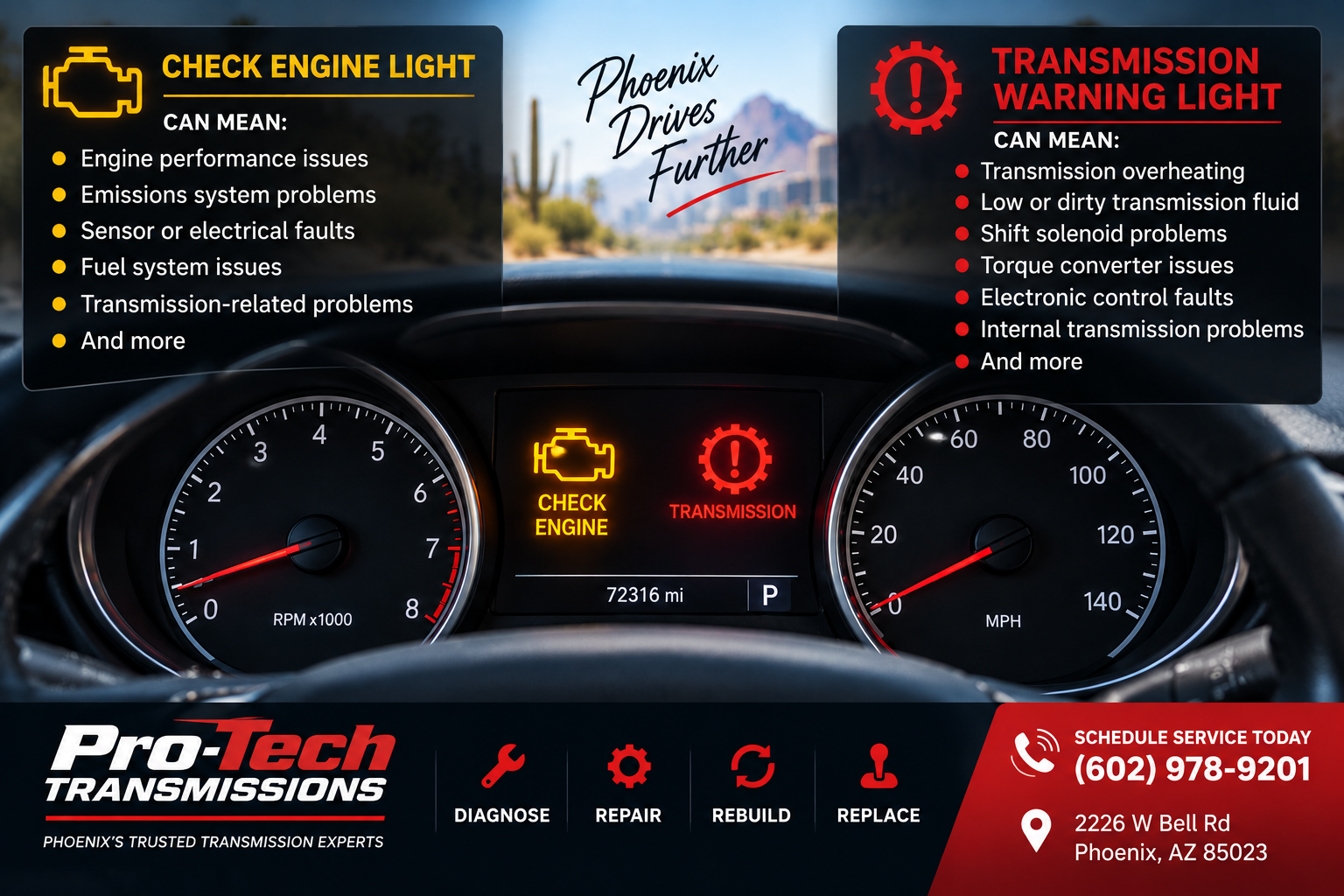
The check engine light is connected to your vehicle’s onboard diagnostic system. When the computer detects a problem that could affect engine performance, emissions, transmission operation, or other related systems, it stores a diagnostic trouble code and may illuminate the check engine light.
Some causes are relatively minor. Others require immediate attention.
Common reasons for a check engine light include:
- Engine misfires
- Oxygen sensor problems
- Emissions system issues
- Fuel delivery problems
- Sensor failures
- Electrical problems
- Transmission-related faults
That last one surprises many drivers.
Because modern automatic transmissions are electronically controlled, a transmission problem can cause the vehicle’s computer to turn on the check engine light even when a separate transmission warning light never appears.
Can a Bad Transmission Cause the Check Engine Light to Come On?
Yes. Transmission problems can trigger a check engine light.
For example, the computer may detect abnormal gear ratios, transmission slipping, excessive transmission temperatures, torque converter problems, or issues with transmission speed sensors and shift solenoids.
That’s why guessing based solely on the dashboard light can be misleading.
If the check engine light comes on and the vehicle is also shifting hard, slipping, hesitating, struggling to go into gear, or behaving differently when accelerating, the underlying problem could be transmission-related.
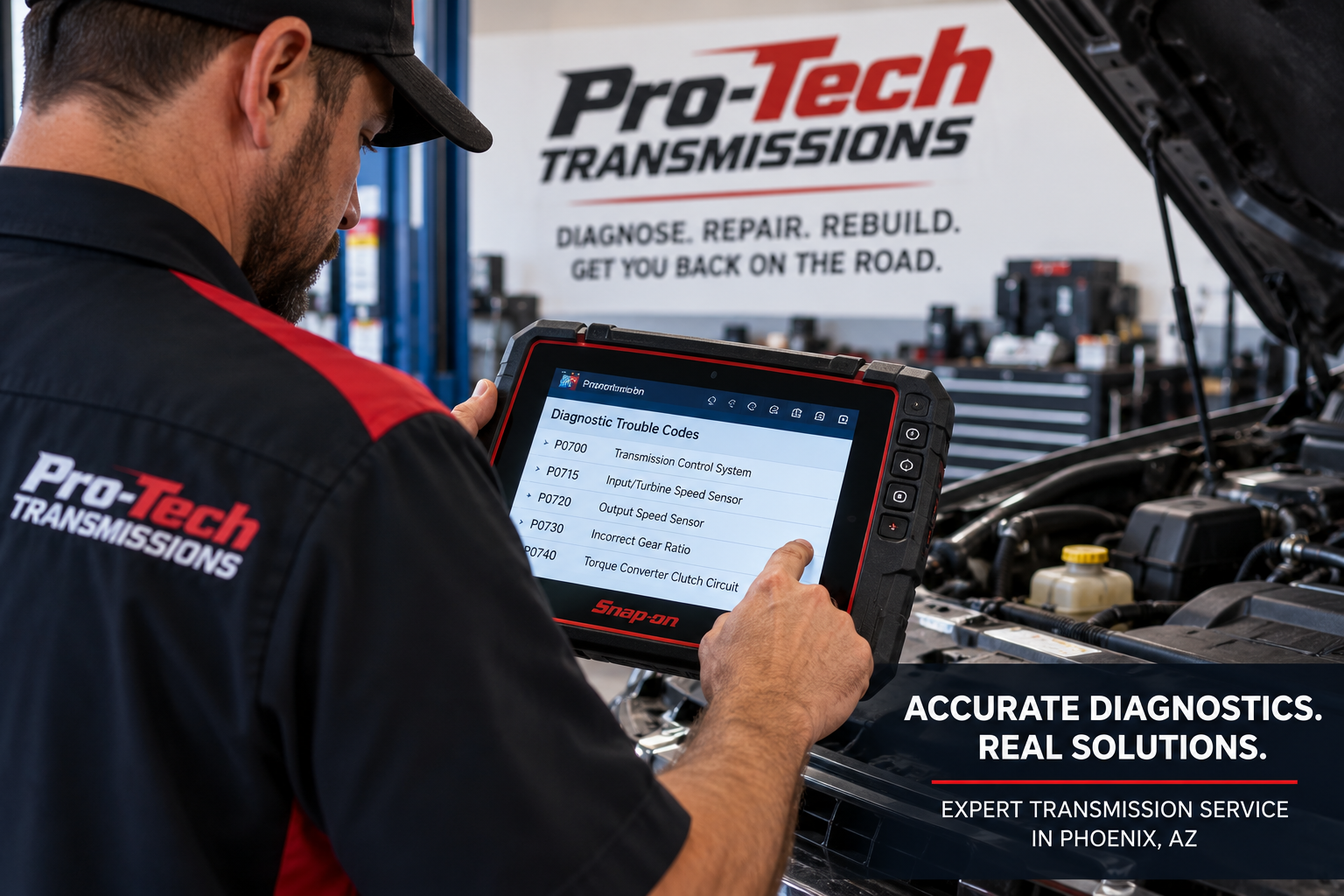
A professional diagnostic inspection can retrieve the stored trouble codes and help identify which system needs further testing.
What Does a Transmission Warning Light Mean?
Not every vehicle has a dedicated transmission warning light. Depending on the make and model, drivers may see a transmission symbol, gear-shaped warning light, temperature warning, wrench symbol, or a dashboard message such as “Transmission Fault” or “Service Transmission.”
A transmission warning usually means the vehicle has detected a problem involving the transmission or transmission control system.
Possible causes include:
- Transmission overheating
- Low or deteriorated transmission fluid
- Electronic control problems
- Faulty sensors
- Shift solenoid problems
- Internal transmission issues
- Torque converter problems
The warning light itself usually doesn’t identify the exact problem. Proper diagnostics are still needed to determine what caused it.
Check Engine Light vs. Transmission Light: What’s the Difference?
The biggest difference is the scope of the warning.
A check engine light can indicate problems involving several vehicle systems, including the transmission. A dedicated transmission warning light more specifically points toward the transmission, transmission temperature, or electronic transmission controls.
However, either light can be accompanied by symptoms that provide additional clues.
Phoenix drivers should pay attention if a warning light appears along with:
- Delayed engagement when shifting into Drive or Reverse
- Slipping between gears
- Hard or rough shifting
- Jerking during acceleration
- Unusual whining, humming, or grinding noises
- Transmission fluid underneath the vehicle
- Burning odors
- Higher-than-normal RPMs
- Loss of acceleration
- Vehicle entering “limp mode”
These symptoms are good reasons to have the transmission checked instead of simply clearing the dashboard code and hoping the light stays off.
What If the Check Engine Light Is Flashing?
A flashing check engine light deserves immediate attention.
While a steady check engine light may indicate a problem that should be diagnosed soon, a flashing light can signal a more serious condition, commonly a severe engine misfire that could damage the catalytic converter.
If the vehicle is running poorly, shaking, losing power, overheating, or showing other severe symptoms, continuing to drive may cause additional damage.
When in doubt, have the vehicle inspected before putting more miles on it.
Can Phoenix Heat Cause Transmission Warning Lights?
Arizona driving conditions can be particularly demanding on transmissions.
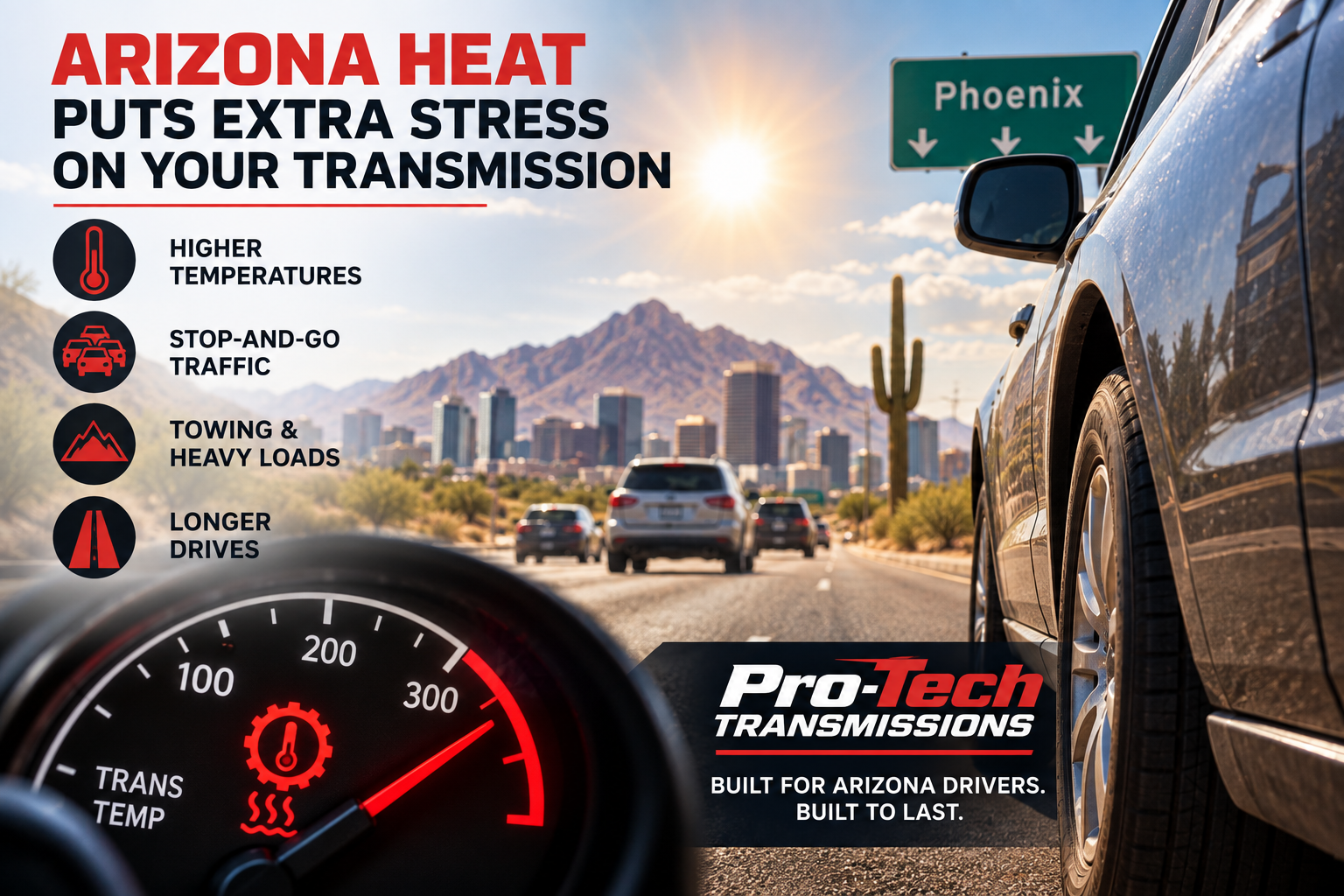
Phoenix’s extreme summer temperatures combined with stop-and-go traffic, long commutes, highway driving, towing, and heavy vehicle loads can place additional stress on a transmission and its cooling system.
Heat is especially important because transmission fluid helps lubricate internal components while also helping manage operating temperatures. If the transmission becomes excessively hot, performance can suffer and a warning light may appear.
Drivers who tow trailers, operate work trucks, or spend significant time driving in Phoenix traffic should be particularly attentive to changes in shifting behavior.
Don’t Replace Parts Based on a Trouble Code Alone
Diagnostic trouble codes are extremely useful, but a code isn’t always a command to replace a specific part.
A code tells a technician where the vehicle’s computer detected an abnormal condition. Additional testing may be necessary to determine why that condition occurred.
For example, an electronic transmission code could potentially involve a sensor, wiring, fluid condition, solenoid, control system, or an internal mechanical issue.
Accurate diagnosis helps avoid replacing unnecessary parts and gets to the actual cause of the problem.
Have a Transmission Warning Light? Let Pro-Tech Transmissions Check It
If your check engine light or transmission warning light is on and your vehicle is showing signs of a transmission problem, Pro-Tech Transmissions in Phoenix, Arizona can help determine what’s happening.
Pro-Tech Transmissions provides professional transmission diagnostics, repair, rebuilding, and replacement for Phoenix-area drivers. The shop works with a wide range of transmission types and can evaluate shifting problems, warning lights, leaks, unusual noises, and other symptoms before recommending the appropriate repair.
The important thing is not to assume the worst.
A dashboard warning light does not automatically mean you need a new transmission. Getting an accurate diagnosis first can help determine whether the issue involves an electronic component, maintenance-related problem, minor repair, or a more significant transmission issue.
Frequently Asked Questions
Can a transmission problem turn on the check engine light?
Yes. Modern vehicles monitor transmission operation electronically, and certain transmission faults can trigger the check engine light.
Does a transmission warning light mean my transmission is failing?
Not necessarily. The warning could be related to temperature, fluid, sensors, electronics, or another transmission-related problem. Diagnostics are needed to identify the cause.
Can I keep driving with a transmission warning light on?
It depends on the cause and how the vehicle is behaving. If the transmission is slipping, overheating, shifting violently, losing power, or producing unusual noises or odors, continuing to drive could make the problem worse.
Why is my check engine light on when my engine seems fine?
The check engine light monitors more than just the engine. Transmission, emissions, fuel, sensor, and electrical faults can also trigger it.
Should I clear the code and see if it comes back?
Clearing a code doesn’t repair the problem that caused it. Having the vehicle properly diagnosed is a better approach, particularly when there are noticeable driving or shifting symptoms.
Schedule Transmission Service in Phoenix, AZ
If your dashboard is warning you that something isn’t right, don’t wait for a small problem to become a much larger repair.
Contact Pro-Tech Transmissions at (602) 978-9201 to schedule an inspection, or visit the Phoenix shop at 2226 W Bell Rd, Phoenix, AZ 85023.
Whether the warning turns out to be an electronic issue, transmission problem, or something else, finding the cause early is the best first step toward getting your vehicle back on the road with confidence.